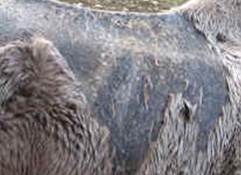
Mud Fever + Rain Scald [Dermatophilosis]Mud fever and rain scald [or greasy heel, dew poisoning, pastern dermatitis, cutaneous streptothrichosis, strawberry foot rot and rain rot] are commonly used terms for a disease of the skin in horses, cattle, sheep, dogs, goats, deer and sometimes humans. This condition is characterised by raised matted tufts of hair with cracks or lesions which form wart like crusts or scabs with yellow|green oozing pus underneath. This condition can be particularly painful for the horse, especially if the infection is located on any moving area such as the pastern joint or lips, and can be very persistent and prolonged.
The disease is caused by the bacteria 'dermatophilus congolense' which is derived from the family known as 'dermatophilaceae' of the order 'actinomycetales'. Simply explained - the organism forms a mass of threadlike filaments which branch out and then segment into spherical packets. These cells mature to become spores which travel by spontaneous movement. The natural habitat of the organism is most probably in soil, however it also lurks in the living layers of the skin of mammals who may be chronically infected, but show no symptoms, until certain climate change exacerbates widespread infection.
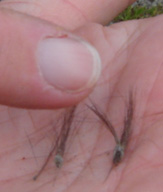
In chronic infections the hair mats together and forms raised tufts from the wart like cracks or crusts and scabs. These can range from 0.5 - 2 cm in diameter with accumulation of pus like yellow oozing underneath. Wherever the skin's protective barrier has been compromised by the above conditions, is where the infection is usually located. For instance, rain scald is usually prevalent on the back, neck and rump areas from prolonged periods of rain, whereas mud fever usually occurs around the pastern area and progresses upwards, from standing in waterlogged or muddy paddocks. Orthodox treatmentDermatophilus congolense organisms are susceptible to a wide range of anti-microbials but the administration of a course of intra muscular injections of penicillin and streptomycin or a single injection of longer acting oxytetracyline by a veterinarian have been found to be successful.As the condition quickly progresses, it can become serious if not treated effectively as the legs can become swollen and tender with open sores which can become infected, especially in muddy conditions. Usually the horse's legs or area where mud fever or rain scald has occurred is required to be washed down with an antibacterial, antibiotic and|or antiseptic solution or shampoo. Products containing chlorhexidine or benzoyl peroxide are thought to be helpful as are topical applications of lotions containing sulphur. Once dried thoroughly, the scabs are picked or rubbed off so that air can assist in preventing the sores from progressing and also enabling them to heal. As the organism is able to multiply prolifically if the conditions are ideal, it is thought that the area should be kept as open and dry as possible to limit this. In this regard anti mud fever boots and applying a barrier cream is also recommended by orthodox practitioners to prevent the skin from becoming further waterlogged and susceptible to this condition. Unfortunately though, continual washing with harsh chemical products can actually compromise the skin even further, as they strip the hair and skin of essential natural oils which form a protective layer. The removal of scabs which also pull a tuft of hair with them, to reveal pink, unprotected areas is both painful for the horse and consequently very dangerous for the owner. Barrier type creams such as those containing lanoline are ineffective, as the horse rarely keeps the cream on in torrential downpours, as are the boots, with the added danger of boots becoming loose and tangled in legs or obstacles in the paddock. Also wearing boots is questionable, as the humid, warm environment can also create more problems in the spread of the condition.
Natural methods to support the healing processDevil's claw is a well known naturopathic remedy which has anti inflammatory properties and which also provides pain relief. The powder is easily purchased from a health or animal feed store and added to feeds at the recommended rates, although it is contra indicated in horses who are pregnant or who have evidence of stomach ulcers. Topical applications of devil's claw can also be helpful when mixed with a little calendula cream. In fact the indigenous people of southern Africa often used devil's claw to heal all kinds of skin lesions, with great success.There are many other herbal remedies which also may aid healing of the skin lesions, however consultation with a qualified and experienced naturopath is recommended so that the most appropriate and safest remedies for the individual situation are selected. Homeopathic remedies are also very helpful in resolving acute situations as well as chronic tendencies to contract this disease. Remedies commonly used for inflammation and skin problems which assist with strengthening the constitution of the animal, as well as halting the progress of the disease and promoting healing are very successful. Assistance should always be obtained by a qualified and experienced homeopath however, who will prescribe the most appropriate remedies for the individual situation. Hypercal solution [a mixture of hypericum and calendula] is a natural alternative to chemical products and is a soothing, pain relieving lotion which is also anti bacterial, anti fungal, anti septic as well as very healing.
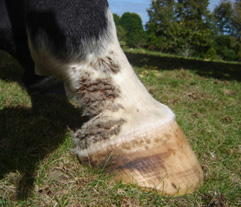
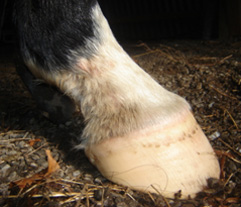
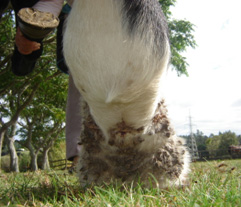
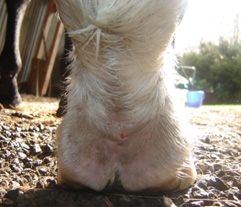
The left top and bottom photo shows a horse who was afflicted with mud fever. At the time the condition became apparent in the month of April - the end of summer in New Zealand, the weather was not rainy, nor humid or overly hot. The horse was not standing in waterlogged paddocks and didn't have any wound or injury that was apparent. However the skin barrier must have been compromised in some way, as he was very tender and had a large amount of cracks, crusts and scabs which had a sudden onset and rapid progression. After homeopathic treatment which was very simple, and which didn't require any washing or picking the scabs, and without any other additional care, his condition improved rapidly, with the sores and scabs becoming totally inactive. This eased his tenderness and enabled healing to occur very quickly. The right top and bottom photos show the condition after one month - a significant improvement and almost total resolution. Most of the scabs were dry and crumbly and able to be rubbed off easily. Despite an extremely prolonged winter with very waterlogged paddocks he has been mud fever [and rain scald] free ever since - eight months as at the date of publishing this case study. Further information about homeopathy, contacting a homeopath, bitless training or barefoot trimming may be viewed on the 'profile', 'photos', 'info' or 'testimonial' sections of the website or by contacting Horse & Human by email, phone or text. |
||||||||||

 Climactic conditions such as prolonged rain, high humidity or high temperatures compromises the natural barrier of the skin, which directly influences the development, prevalence, seasonal incidence and transmission of this disease. High humidity also creates increased numbers of flies and ticks which act as transmitters as well as prolonged moisture releasing the spores from pre existing lesions on the horse, which then establish new areas of infection. It is often thought that dermatophilosis is contagious - however this is not quite the case. This condition can only be established if the horse has pre existing lesions, or the skin's normal protective barrier is reduced or deficient in some way - for example in less tough non pigmented skin, a wound, sun burn, cover rub, skin becoming waterlogged, or from biting insects etc. When the protective barrier has been reduced in some way, lower amounts of carbon dioxide are released from the skin which attract spores. The spores are able to penetrate and germinate thus causing the inflammatory reaction. Natural resistance is common in many horses, however for those who's immune system is not developed or not functioning as it should [which can be from unnatural living conditions and abusive methods of handling or riding] - once the infection is established, there is little immunity.