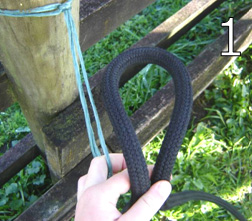
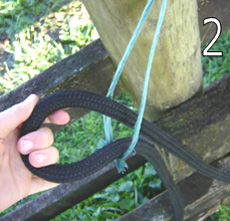
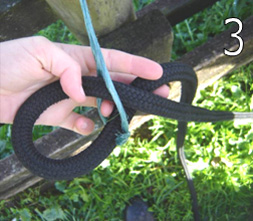
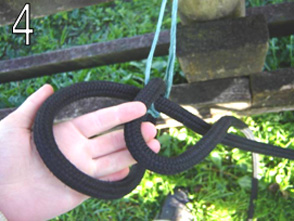
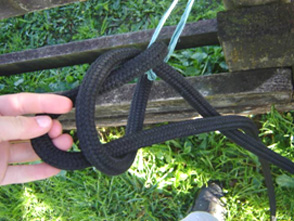
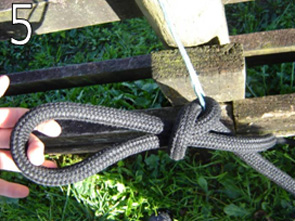
How to Tie a Quick ReleaseBefore tying a quick release, it's important to make sure that you've allowed enough length in the rope for the horse to comfortably move their head around, but not enough for them to get their legs caught. Remember horses are prey animals, and they need to be aware of everything around them. If you tie a horse up too tight, and they're unable to look around to check out possible dangers, this can make them feel anxious or jumpy First of all some safety tips... Always make sure that the horse is tied up to a loop of twine, rather than straight onto a fence, gate or other object. This is really important, because if the horse gets a fright, or pulls back, you want the twine to break. Although this means that the horse might run off... it is preferable to a head or neck injury which may occur if a horse pulls back when tied to something fixed
|