WHY NO COVERS...
There are many reasons why horses shouldn't be covered, but before viewing the following explanations, one must perhaps first explore why we as humans feel the intense desire to buy covers and other things for our horses that they neither need nor want.
The power of advertising
The horse 'industry' is a multi billion dollar machine which thrives in every part of the world. Advertisements which promote everything from sporting events, nutrition, accessories and transport right down to smaller items like hoof oil, brushes etc contain slick imagery, exaggerated claims or even downright deception. Some say that these advertisements are large scale efforts which channel our un-thinking habits, our purchasing decisions and our thought processes. Perhaps, even if we are discerning, there may be a possibility that we're influenced and manipulated by marketing strategies far more than we realise in the patterns of our every day lives.
 Advertising has been around for years and today though far more visually stimulating and interactive, it still relies on the same principles to sell products. As an example - James Norris the author of 'Advertising and the Transformation of American Society, 1865-1920' points out that acceptance into society of the infamous 'Pears' soap, was in no small part due to advertisements in 1884 which featured a famed preacher called Henry Ward Beecher who extolled the godly virtues of it!
'Advertising the American Dream' by Roland Marchand states that in his view, the use of branding, advertising, department stores and other various means introduces competition for status that support unending cycles of consumption. Sociologist Michael Schudson also states that advertising celebrates and promotes life and lives worth emulating. All interesting perspectives. But what does this actually mean when one makes a 'random' choice to purchase that particular 'John Brown' horse cover?
It means that subconsciously perhaps one is eager to identify with that particular person, who is no doubt a 'successful' equestrian and to also identify with one's peers. It also probably means one wants their horse by association, to look like the horse in the advertisement who most probably appears to be performing successfully, is well trained, looking handsome, expensive and immaculately turned out. Additionally, as animal lovers we have a natural desire to nurture, comfort, protect, treat and nourish our beloved horses. Unfortunately this leads to people placing human values on animals which is inappropriate, unnecessary and sometimes actually dangerous. Of course as consumers, we're also encouraged to buy more and more stuff… and lots of it.
As humans, we're socially, emotionally, behaviourally and physically very, very different from horses. Horses don't care if a cover is designed by 'John Brown', marketed by his slick company, advertised in up market magazines, only purchased at a particular store, costs less or more than others, has attractive colours and new space age fastenings or fabric. And without a doubt all horses, no matter what advertisements and seemingly scientific articles claim, do not need or want covers - or in fact anything else manufactured by humans!
So what's so bad about covering a horse?
Through evolution, horses have perfected their ability to efficiently and unconsciously regulate their core body temperature and to protect themselves in extremes of all types of weather. They accomplish this by responding to stimulus in the environmental conditions in which they live and by initiating automatic and innate physiological activities. This is achieved by constant minute adjustments within the body which strives for equilibrium [homeostasis] at all times, and which creates a strong and responsive immune system. Conversely, when humans interfere with the natural functions of the body by covering, or even in lesser ways - the opposite occurs. The body's natural functions are suppressed or overloaded which creates biological dysfunction. Singularly or combined with other stresses as well, this translates to an unhealthy and unresponsive immune system, which in turn creates susceptibility to disease and delayed healing.
Examples :
- Total natural coat -v- partial artificial cover
The hair on a horse grows quickly in response to cooler weather and is shed just as promptly when warmer weather arrives. The coat covers the whole body and grows slightly thicker or less thick naturally in the areas the horse requires it. All body systems work in perfect harmony to not only equip the horse with whatever is required at the time, but in so doing also ensures the immune system is in optimal working order and ready for any challenge.
An artificial cover doesn't cover the whole horse. This requires the horse to grow thicker hair on the areas such as belly and legs which aren't covered, but to also shed hair on the back and neck because of excessive heat generated by the cover - like an artificial summer. The difference between the two functions are too extreme and requires both growing and shedding, which the automatic responses of the body are not designed to cope with at the same time.
Also, when the cover is removed in a cold wind whilst humans talk together, groom, tack up, hooves are trimmed etc, the horse is poorly equipped to adjust to such an abrupt change in temperature, which is then changed abruptly yet again an hour or so later when a cover is put on. Whilst horses respond quickly to the environment, their response isn't instantaneous.
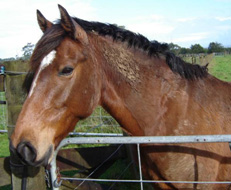
 Thoroughbred mare [Misty] close up showing a healthy coat which is dense, long and shiny in the middle of winter
 Thoroughbred mare (Misty) close up showing a healthy coat which is thin, short and shiny in the middle of summer
Responsive muscles -v- non responsive
Skin plays an important part in heating and cooling. In cooler weather, hundreds of tiny muscles all over the body activate hairs to stand outwards instead of laying flat on the skin. The activity of these muscles create heat within the body. As well, the dimpled effect created on the surface of the skin and the pockets of air trapped between the dimples and raised hairs, warms the skin and therefore the circulating blood. In warmer weather the hair lays flat, the skin is un dimpled and is cooled by parting of the hair and other thermo regulatory functions.
Without use, the muscles which raise the hairs and dimple the skin begin to weaken and lose the ability to contract efficiently which creates biological dysfunction as well as an inability to create warmth when the cover is abruptly removed for short periods of time.
Additionally in cool weather when a cover is worn, the body is required to isolate the automatic response of raising hairs, dimpling the skin or shivering to the belly, legs and face which is uncovered and cooler, compared to the back and neck which are covered and excessively warmer. The body's attempts to warm itself creates too much heat in the back and neck which activates the sweating [and other] responses. Warming and cooling are two opposite biological functions and the body is not designed to cope with activating both at the same time.
Horse temperatures and comfort -v- human
From the large skeletal muscles working at full potential to the smallest of muscles which twitch an eye or raise a hair, any kind of movement no matter how tiny, generates internal body heat. Heat is also generated from internal processes such as digestion, immune function, the heart beating, lungs filling etc.
Horses don't have a day and night pattern or sleep for eight hours as humans do. Instead they nap, wake and eat constantly throughout the day and night. Consequently because they move constantly and for longer periods than we do - up to twenty hours each day, they generate far more heat and chill far less easily than us humans. In fact horses are more concerned with dissipating the heat generated from constant motion - tail swishing, ear flicking, muscle twitching, chewing, swallowing, digesting, breathing, walking, running, playing etc than they are about keeping warm. As well, they have the advantage of a natural coat which is wonderfully designed to grow and shed as quickly as they require.
Owners lovingly place a cover on their horse when the weather is cold or rainy or put them 'to bed' in a stable, because that's what makes them as a human, feel cosy, warm and safe. For a horse this can be a terrifying and uncomfortable experience. We have an innate desire to nurture our loved ones, and whilst that's a desirable human trait, it's inappropriate and un necessary for an animal who is both designed to be well equipped for all weather conditions, and one who does not enjoy or need it.
Problems also arise if the horse is covered and the owner isn't close at hand to remove it if the weather suddenly changes. Even winter time, especially here in New Zealand is fairly temperate, and some days are sunny and very hot especially in a sheltered spot. After a good gallop horses can be sweating profusely under their covers which they can do little about. If a human is hot, they have the option of taking action to cool themselves - stripping off layers of clothing, standing by a breeze or cool fan, taking a cool shower, drinking a cold drink. A horse cannot. Consequently their bodies are placed under considerable stress which creates physical dysfunction and which also has an impact on their emotional wellbeing.

-
Sweating -v- overheating
Sweating is an important and essential automatic reaction by the body to cool itself when it becomes overheated. In fact humans and horses are two of the few species that cool themselves by sweating. Heat which is created by exercise, ambient temperature, infection, too much clothing etc is removed from inside the body by the action of parting of hair, breathing, urination, surfacing of blood vessels and of course by sweating.
The creation of sweat is simply made from water which is contained in the blood. It is drawn out of the blood, redirected and released onto the surface of the skin where it then evaporates from circulating air. Blood vessels play an important part in cooling the blood by redirecting warmed blood to smaller and more surface dilated capillaries. The blood in these surface capillaries is then cooled by the evaporation of sweat. In cooler conditions the opposite occurs and blood vessels constrict and move more inside the body. Once the body senses that enough circulating blood has been cooled sufficiently, sweat production is decreased and then discontinued.
 If a horse is covered and becomes too heated, the body starts producing sweat in an effort to cool the internal temperature. Since there is no circulating air to evaporate the sweat and the horse cannot take it's cover off as a human can do if heavily clothed, the body's internal temperature continues to rise. As the temperature rises, the body's efforts continue to draw more water from the blood vessels than is normally required for the production of even more sweat.
A situation quickly develops where this abnormal water reduction in the blood decreases the blood volume circulating around the body. This creates a reduction of pressure within the vessels which therefore decreases the ability of the body to circulate blood to vital organs and peripheral vessels. The body is inherently designed to avoid low blood pressure at all costs, therefore it shuts down the blood supply to the skin and sweat production ceases. This causes blood which is too heated to circulate around the body. Widespread organ failure and tissue death result.
As humans, our internal body temperature only needs to rise three degrees celsius before a medical emergency occurs. A change of only six degrees celsius causes almost certain death. Whilst death from overheating is not common in leisure riding, the same cannot be said for horses involved in sporting events. Especially dangerous is a situation when a horse has been exercised vigorously and hasn't been allowed to cool down sufficiently before a cover is replaced. Also on the odd occasion, a day can be unseasonably hot or perhaps there is an upset which causes the horse to run around frequently in it's paddock. Whilst it may not be life threatening, it does however create a situation where the body's biological functions are stressed and the horse is very uncomfortable.
The above photo shows thoroughbred mare (Misty) steaming in the middle of winter after a very brief sprint around with her herd. By being uncovered she is able to efficiently dissipate the heat generated.
Healthy skin -v- unhealthy
The skin is the largest organ in the body and as such it requires circulating air, sunshine, rain, wind, rolling in mud and scratching to keep it in optimal condition. Often covering a horse can lead to cover rubs, sores, greasy scales, dandruff, fungus infections, delayed healing and excessive malting which can't be dispersed. A cover doesn't allow the skin to function or 'breathe' as nature intended which creates negative effects on overall health and is also evidenced as skin and a coat which is dysfunctional and lacking in vitality.
Comfort, play and discipline -v- absence
Horses nibble, bite and spar with each other as a natural way of reinforcing hierarchical order and to itch hard to get at spots, to provide comfort and for play. Inhibiting this process removes an important aspect of interaction together which they obviously enjoy. The photo below shows bay thoroughbred gelding [Hunter], newly arrived and very underweight with Apache bonding, playing and scratching one another.

A cover can also deflect a nip which a horse higher in dominance may use to warn or discipline a horse lower in dominance. Although the act of a nip also contains an energy and body language which the lower horse also reacts to, the lower horse may be a little more unaware of the disciplinary action with a cover on, therefore placing it in greater danger of stronger reinforcement.
Safety -v- danger
Placing covers and straps on a horse is extremely dangerous. Any part of the cover can get caught or tangled in legs, fence posts, other horses and various other paddock obstacles. Covers often fall to one side after the horse has rolled or rip and hang, which creates not only a nuisance, but an unsafe situation when left for prolonged periods or when owners aren't living close by to attend to it.
Why are covers used?
Covering a horse is promoted within the horse industry simply and for no reason other than to sell product and gain profit. A horse does look sleeker, shinier and more muscled when it's body is covered by a lighter covering of hair. For this reason many horse owners like the look, therefore keep their horses in a state of perpetual summer by using a cover. However innocuous this seems, the disturbance in biological functions has far reaching negative effects on the health, wellbeing and safety of the horse.
My experiences
My sturdy kaimanawa pony, delicate thoroughbred mare and my recently attained big thoroughbred gelding are uncovered all year long. Both thoroughbreds were around eight years old when they came to me and had been covered since they were young. They all live at my property as well as other horses, where I'm able to observe them throughout every season. They have natural hedging and large evergreen and deciduous trees available to shelter by or under. They also have copses of trees and a huge open entranced barn and sides of buildings to shelter in and by.
However through driving rain, drizzle, blustering wind, frosts, hail and thunderstorms they prefer to be in the middle of the fields with their rear to the wind, out of danger of falling branches or predators who naturally lurk in bushes. They graze peacefully in the midst of everything. The only time they seek shelter or shade is only on odd occasions, and when there is no wind at all with a light drizzle or when they're napping or shading themselves from the summer sun.


CONTENT AND HEALTHY IN ALL SEASONS WITH NO COVERS
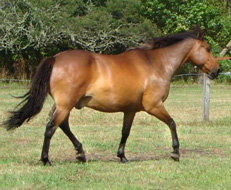
Misty
My thoroughbred mare Misty had been covered all her life and was underweight when she came to me. She arrived at the start of summer and was able to become accustomed to having no cover throughout the summer with temperatures here in New Zealand of around 18 - 28 degrees celsius and to prepare as winter arrived. Her skin was rubbed and scarred on the chest from a cover and after two years only slowly started growing the hair back in that spot. She had greasy scales on her rump and legs, with dandruff everywhere, sores along her spine and a face that was almost bare of hair. The first winter without a cover she grew sparse long hair rather than a thick winter coat, but still never shivered, never sought shelter, never had any illness and consistently gained weight.
Her mane and tail showed remarkable improvement after just a few months with no special treatment other than removing her cover and continues to be flexible, thick, shiny and healthy. Her skin also became healthier within a few months and with each successive season she has grown a healthier and denser winter coat.
 |
 |
| LEFT PHOTO : MISTY'S ARRIVAL - RIGHT PHOTO : AFTER FIRST WINTER |
Hunter
My thoroughbred gelding Hunter was considerably more underweight when he arrived at the beginning of a winter which ranges from around 0 - 12 degrees celsius here in New Zealand. He also had been used to wearing a cover his whole life, but adapted very quickly to the cooler temperatures, growing a thicker winter coat within a few days which became increasingly thicker over the following couple of months. His skin was also full of greasy scales and dandruff, but after a month or so started to improve and became shiny and healthy. His mane and tail also became flexible, thick, shiny and healthy. Like my thoroughbred mare, he never shivered, never sought shelter, never had any illness and consistently gained weight.
 |
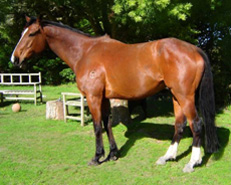 |
| LEFT PHOTO : HUNTER'S ARRIVAL - RIGHT PHOTO : AFTER FIRST WINTER |
Tye
My kaimanawa pony Tye was originally mustered from a herd of wild kaimanawa horses who roam the Kaimanawa Ranges in the central north island of New Zealand. To my knowledge he has never worn a cover and consequently has a very strong immune system. He adapts very quickly to any weather conditions and has never had any illness, never shivers, never seeks shelter and happily grazes as all the horses do, in the middle of the paddocks in any weather. His winter coat is like a thickly woven short carpet and his summer coat sleek and shiny - both exhibiting health and vitality.
Further information about bitless training or barefoot trimming may be viewed on the 'profile', 'photos', 'info' or 'testimonial' sections of the website or by contacting Horse & Human by email, phone or text.